Nature Strip Conversion
That strip of grass between the footpath and the road is mowed, ignored, and going nowhere. We turn it into a small native garden — permit handled, planted properly, left alone once it's in.
Free Instant Estimate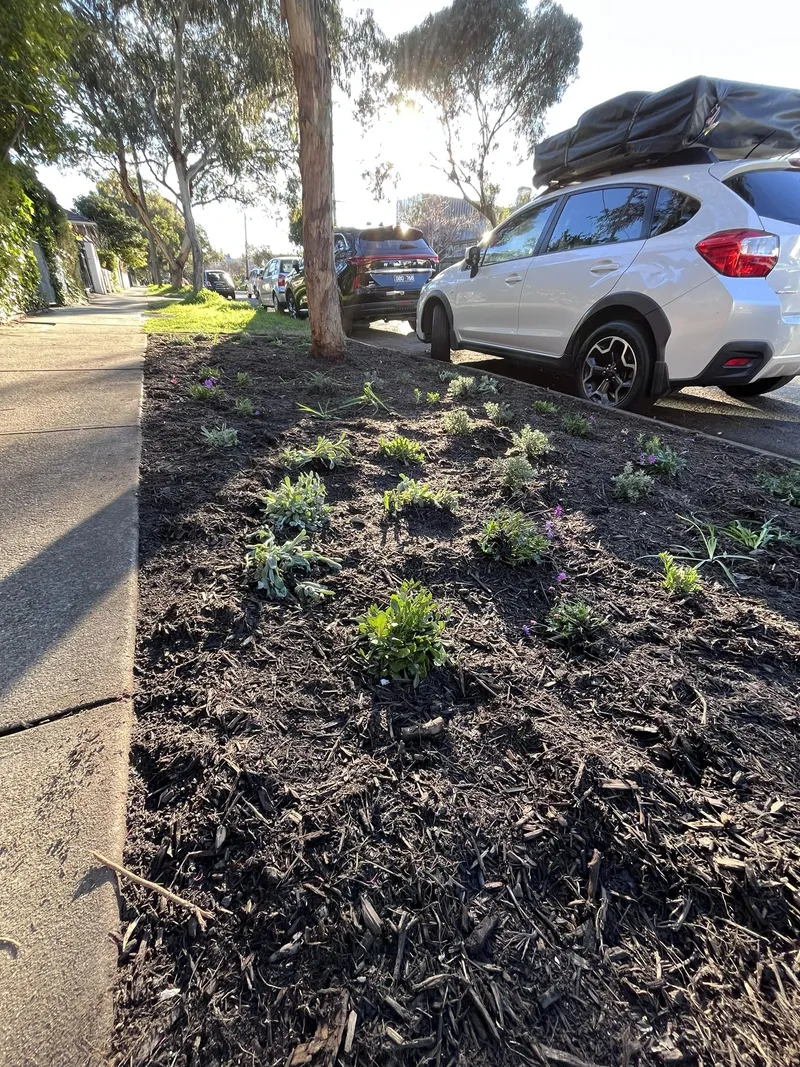
Three options to re-wild
Plan & Permit
The paperwork, handled. We run a Before You Dig Australia check, sketch your layout, and submit a compliant application straight to your council.
Weeds to Wonder
Full installation. Existing turf stripped, soil properly conditioned, clean spade-cut edges, and your plant palette installed under a 75mm layer of mulch. Waste removal quoted separately.
Better Every Season
Ongoing upkeep. We come back every 90 days to keep weeds down, top up the mulch, and prune back to your council's height limits.
Before & after
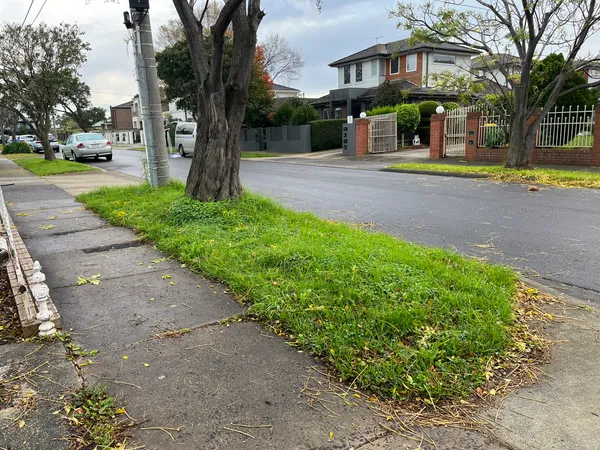
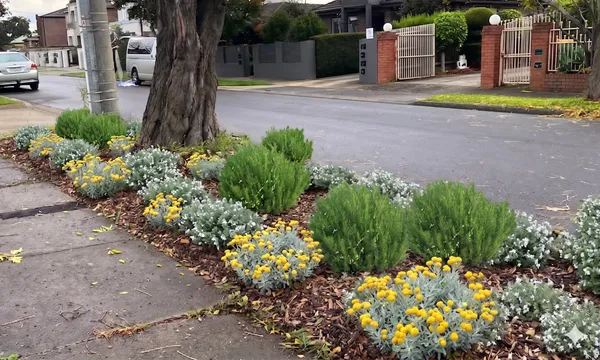
"After" images are visualisations, not photos of a completed project.
Signature palettes
Four pre-approved style combinations, chosen to suit Melbourne's climate and stay within council guidelines.
Images shown are visualisations, not photos of completed projects.
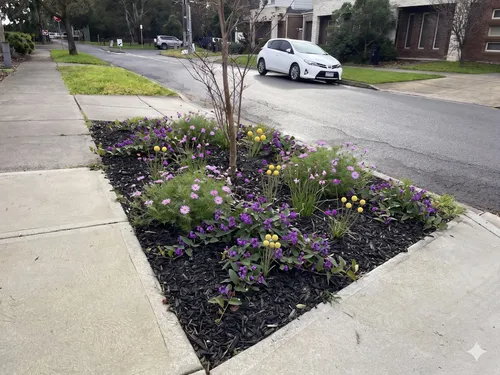
The Pollinator Haven
Wild, colourful native flowers that bring the birds and pollinators back to the street.
Cut-leaf Daisy · Chocolate Lily · Purple Coral-pea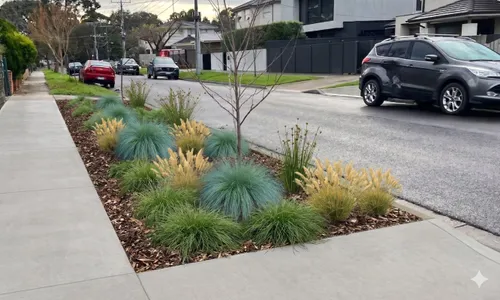
The Tussock & Texture
Native grasses that move with the breeze — calm, low-water, structured year-round.
Common Tussock-grass · Kangaroo Grass · Wallaby Grass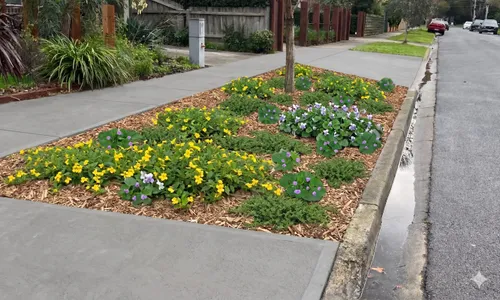
The Urban Groundcover
A dense living carpet of hardy groundcovers — the zero-mow answer to a lawn.
Creeping Boobialla · Native Violet · Kidney Weed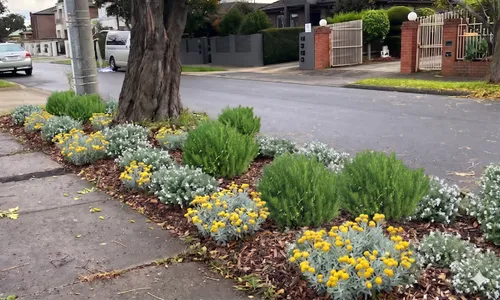
The Coastal Compact
Structured and silver-toned — a tidy, compact planting that stays sharp all year.
Coast Rosemary · Rock Correa · Ruby SaltbushInstant install estimate
Enter your nature strip's dimensions for a rough install cost, on the spot. Final pricing is confirmed during a site visit.
Estimate only, inc. GST. Covers installation, mulch, plants, and existing grass removal. Confirmed during a site visit.
Council compliant
Banyule & Darebin compliant
BYDA checked
Underground utilities verified
Zero permit stress
We handle all applications
Insured
Full professional coverage
Nature strip questions, answered
Permits & council rules
Can I plant my nature strip in Melbourne?
Yes — in most Melbourne councils, including Banyule and Darebin, residents can plant their nature strip, but you need council approval first. Each council has specific guidelines covering plant heights, sight lines, and clearances. We manage the approval process for Banyule and Darebin properties.
Do I need a permit to plant my nature strip in Banyule?
Council approval is required. The current guidelines allow taller plants (up to 70 cm) in the central area of the strip, with lower plants and groundcovers (up to 30 cm) along the edges. Approved materials must be used, weedy species avoided, and clear space maintained for bins and pedestrians.
Do I need approval to plant my nature strip in Darebin?
Darebin asks residents to complete its Online Nature Strip Approval Questionnaire before planting. The questionnaire guides you through Darebin's Nature Strip Guidelines and often provides immediate approval without waiting for written confirmation.
Are there height limits for nature strip plants?
Yes. In Banyule, taller plants up to 70 cm are allowed in the central area of the nature strip, while the outside edges — next to the kerb, footpath and driveways — must stay at 30 cm or below.
What happens if I plant my nature strip without council approval?
Planting without approval risks being asked to remove the garden at your own cost, and councils can enforce their guidelines under local laws. It also creates headaches if underground services need access. Getting approval is straightforward when the design is right — which is exactly what we do. Going through the proper process protects your investment in the garden.
Can people still park and open car doors next to a planted nature strip?
Yes. Council guidelines require it — that means low planting (30cm or under) along the kerb edge so car doors open freely, and regular gaps in the planting so pedestrians can safely step out of parked cars. Designs also leave flat, clear space for three 240L bins on collection day. Compliant designs keep neighbours and councils happy.
Ownership & responsibility
Who owns the nature strip in front of my house?
Your local council owns the nature strip (also called the verge) — the land between your property boundary and the road. Residents maintain it but need council approval to modify it since it is public land.
Who maintains a nature strip garden — me or the council?
You do — the resident is responsible for maintaining the nature strip, planted or not. Council maintains only the street trees. Our Better Every Season subscription provides quarterly professional maintenance.
Cost & service
How much does nature strip landscaping cost in Melbourne?
Plan & Permit is a flat fee of $295 for design and approval. Weeds to Wonder is our full installation service, priced per square metre, with separate quotes for waste removal. Better Every Season is a quarterly maintenance subscription at $195 per quarter.
Can someone get the council permit for my nature strip garden?
Yes, our Plan & Permit service costs $295. We assess your strip, design a garden that meets your council's guidelines (Banyule or Darebin), and manage the application through to approval.
Do you remove the existing grass and weeds?
Yes. Our Weeds to Wonder service includes clearing the existing lawn and weeds, preparing the soil, planting, and mulching. Green waste and soil removal are quoted separately.
Which Melbourne suburbs do you service?
We service the Banyule and Darebin council areas, including suburbs like Ivanhoe, Heidelberg, Rosanna, Viewbank, Montmorency, Greensborough and Watsonia in Banyule, and Northcote, Thornbury, Preston, Reservoir, Fairfield and Alphington in Darebin.
Plants & maintenance
What are the best plants for a nature strip in Melbourne?
Recommended species include compact Correa varieties, strappy Lomandra, groundcovers like Myoporum parvifolium and native violets, and flowering plants like Brachyscome daisies and Chrysocephalum. Plants must suit local conditions and comply with council height restrictions.
Are native nature strip gardens low-maintenance?
Once established, yes — significantly lower maintenance than lawn. No weekly mowing, minimal watering after the first summer, and mulch keeps most weeds down. The establishment period requires regular attention.
Can I plant non-native plants on my nature strip?
Yes on most strips — both native and non-native species are allowed, as long as they meet the height rules and aren't weedy or spiky. The exception: nature strips within 200m of a waterway or biodiversity corridor must be planted exclusively with locally indigenous species. We check which rules apply to your address as part of every design.